Financing a Feedlot Operation for a Texas Dairy
Some dairies add a feedlot to finish calves or beef-cross animals, spreading income across more than milk. It can work, but it is a different business with different price cycles and a different set of risks.
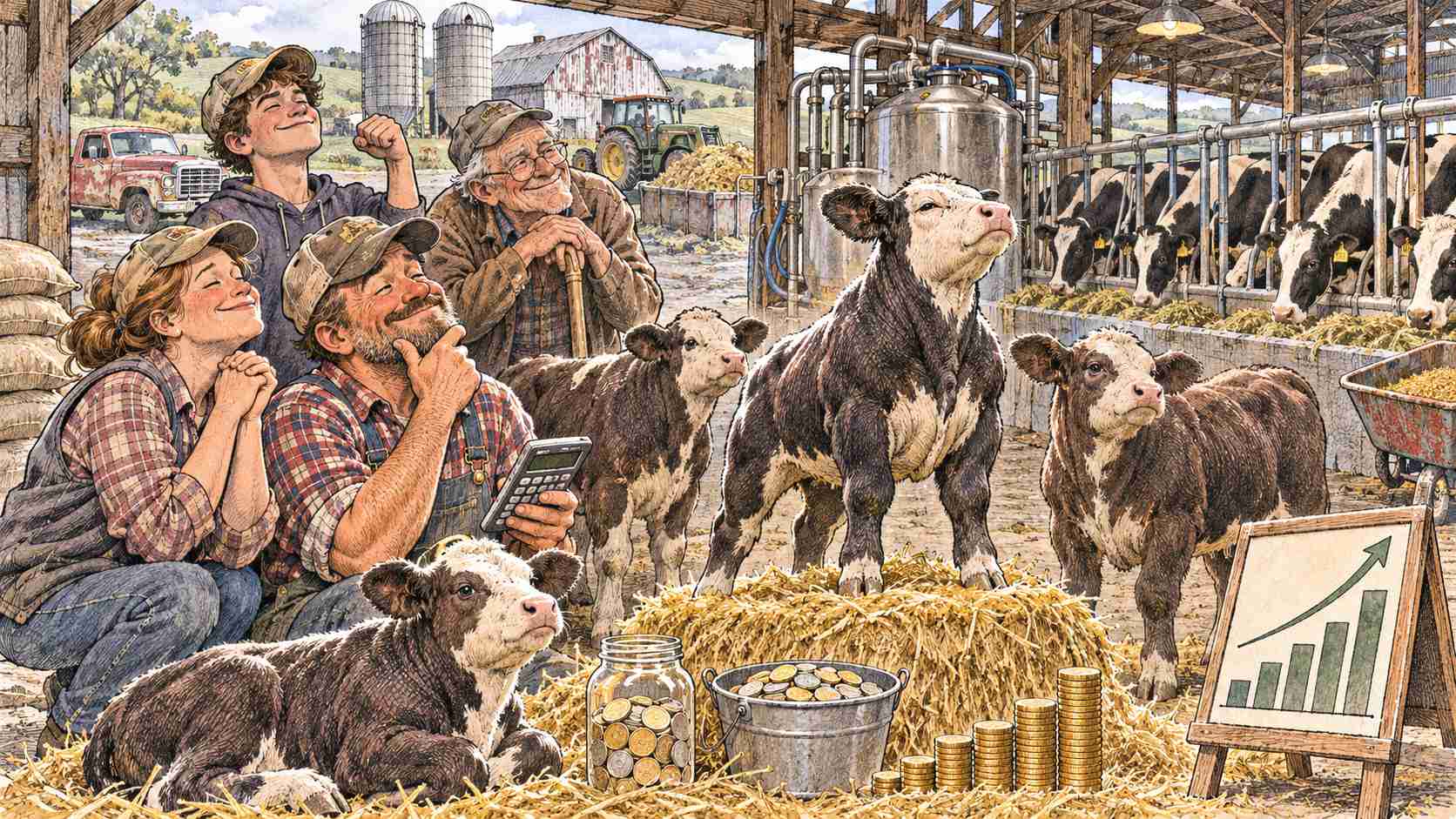
Why would a dairy add a feedlot?
The usual reasons are to capture more value from calves, use feed and labor more fully and diversify income. A dairy produces a steady flow of animals, and some producers decide to feed them to market weight rather than sell them young.
The risk is that cattle feeding runs on thin margins and big swings. Feed cost, cattle prices and death loss can erase profit quickly, and the money is tied up for months before a sale. A lender will ask whether your dairy can absorb a bad cycle.
Talk with other producers who have done it, and ask what they would change. A neighbor's honest account of a bad cattle year is worth more than a brochure.
What does the project cost?
Beyond the animals and feed, you may need pens, feed bunks, water, shade, working facilities, a mixing system, waste handling and extra equipment. Each has its own price, and you will need operating money to buy and feed cattle before the first sale.
Operating capital is the piece people underestimate. A pen of cattle can need a large amount of cash long before it earns, so build the operating line request carefully and ask lenders how they set limits.
- Pens, bunks, water and shade
- Handling and loading facilities
- Feed storage and mixing equipment
- Waste and runoff controls
- Operating capital for cattle and feed
What do lenders want to see?
They want to see experience, a written plan, a budget with multiple price scenarios and a clear separation between the dairy and the feedlot. They also want to know how you will price risk, whether through contracts, insurance or simple limits on how many head you carry.
Compare local banks, Farm Credit associations and FSA loans. Confirm terms directly and ask about how each treats livestock inventory as collateral. USDA AMS publishes market news that helps you check price assumptions.
Be ready to explain how the feedlot will be managed day to day, and who will do the work. Lenders read labor gaps as risk.
What regulations apply?
Feeding operations can fall under environmental permitting depending on size and location. Contact TCEQ early about what applies to you, and ask about runoff and waste handling. Animal health and movement rules are tracked by the Texas Animal Health Commission.
A design that does not meet permit requirements is a design you cannot finance. Have an engineer or a knowledgeable consultant review before you commit.
Keep records of manure and runoff handling from day one. If an inspector visits, a clean file makes the visit shorter and calmer.
How does Texas weather play into it?
Heat stress, mud, drought and storms all hit feedlots. Central Texas near Hico can swing from dust to flooding in one year, which affects gain, health and pen conditions. Check the U.S. Drought Monitor and National Weather Service and plan shade, drainage and water capacity.
Feed costs also move with weather. Ask Texas A&M AgriLife Extension about local feed and cattle health guidance, and see beef cattle feeding guidance for general practices.
How do you protect the dairy side?
Keep the two businesses in separate books. Do not let a bad pen of cattle drain cash that your milk side needs. Set a loss limit in advance and decide what you will do if you hit it.
Look at how risk tools fit, including crop and livestock insurance options through RMA where available, and ask your agent what applies. For general budgeting, see farm money basics.
Write down exit rules too: what price, what loss or what feed cost would make you stop buying cattle, and how you would wind down the pens without hurting the dairy.
What are the next steps?
Start with a small pilot, track every cost and sale, then decide whether to scale. Meet with two lenders and an accountant and bring your records.
This independent education site is not a lender, and nothing here is financial advice. Check current terms with licensed professionals. For lighter reading, farm.FM has the ranching stories and the dairy section, plus a farm.FM story about feedlot cattle.
Sources and further reading
- Farm Credit: cooperative agricultural lending network
- FSA Farm Loans: FSA direct, guaranteed, microloan and emergency loan information
- USDA AMS: marketing and market news
- TCEQ: Texas environmental regulator
- Texas Animal Health Commission: animal disease rules
- U.S. Drought Monitor: weekly drought maps
Ask locally: Ask TCEQ and Texas A&M AgriLife Extension about permits and feeding practices, then a licensed lender about structure.
General education only, not financial, legal or tax advice, and Texas Dairy Loan Guide is not a lender. Rates, terms and deadlines change, so confirm current details with the lender or agency.